Specifying RFID Fiber Port Monitoring for ODF and MMR Frames: A Buyer's Checklist with Field Benchmarks
A practical specification checklist for overseas buyers evaluating RFID fiber port monitoring on ODF and MMR frames: hardware form factor, tag power model, gateway and integration requirements, and the field-measured benchmarks worth asking a supplier to prove.
Start with the physical reality of your frames
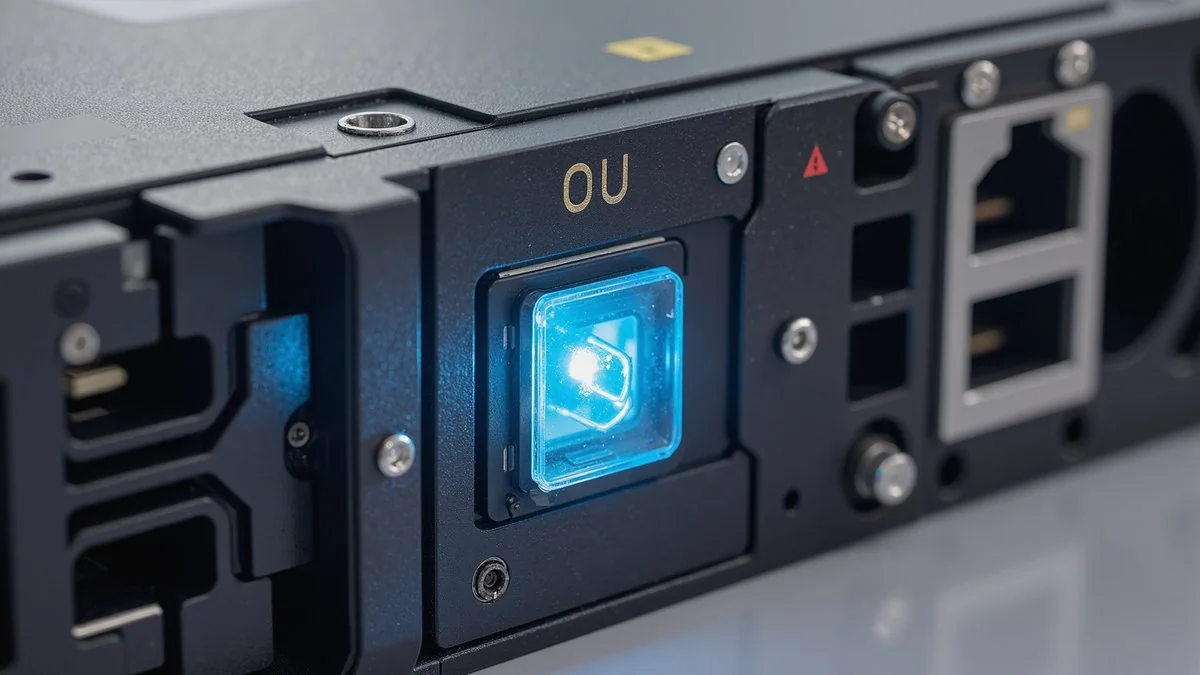
Most evaluations fail at the first question: can the hardware be installed on frames that are already carrying live service? In central offices, meet-me rooms and enterprise campuses, ODF and MMR frames cannot be taken out of service for a retrofit. That rules out any design that requires rewiring, re-patching or replacing existing panels.
A retrofit overlay approach answers this directly: passive clip-on tags attach to optical patch cords and ports, a rack-mounted auto-scanner reads a full patch field in bulk, and nothing in the live optical path is touched. If a proposal starts with migrating your jumpers, the project risk profile changes entirely.
Specification checklist for ODF and MMR retrofits
Use the list below as a line-by-line requirement sheet. Each item maps to a measurable capability rather than a marketing claim, so it can be verified during a pilot.
- Frame compatibility: sub-control board designed for standard ODF and sub-rack form factors, with no modification to existing panels.
- Tag power model: passive tags with no battery and no external power on the tag, so there is no battery replacement cycle across thousands of ports.
- Scan throughput: bulk scanning of 1,000+ ports in roughly 20 seconds per pass, so one walk covers a full cabinet.
- Data path: secure on-premise LAN or Wi-Fi gateway with no cellular dependency, suitable for segregated network zones.
- Integration: documented REST APIs for two-way exchange with your existing DCIM or OSS, not a closed appliance.
- Record model: live port occupancy plus plug and unplug event reporting, so the platform view tracks physical reality.
- Mobile workflow: a single app for site connection, tag collection, verification and task closure, with no paper step.
The benchmarks worth asking a supplier to prove
Efficiency claims are only useful if they were produced against a comparable baseline. Field-measured pilot data from regional carrier deployments provides a defensible comparison, because the same sites and the same task types were measured under both the traditional manual workflow and the RFID auto-scanning workflow.
- Field survey and tagging: 172 minutes to 30 minutes.
- Information audit and entry: 112 minutes to 5 seconds of automated verification.
- Service provisioning turnaround: 1 day to 3 hours.
- Process cycles per audit project: 5 cycles to 3 cycles.
- Cross-connect audit cycle: 3 days to 1 day.
- Move/add/change design cycle: 4 days to 1.5 days.
- Fault backup route lookup: 10 minutes to 1 second.
- Resource query and verification efficiency: +90% overall.
Where the recovered capacity comes from
Port-level accuracy changes the economics of an existing facility. Across pilot audits, roughly 20% of ports previously recorded as stranded or unknown were released back into the sellable pool once the physical and logical records matched. Typical DC OPEX return measured 1:3, and deployments cover 38 digitally transformed pilot sites.
For a buyer, the practical question is not peak scan speed but how quickly recovered ports translate into deferred cabinet or FDH investment and shorter time to the next customer drop.
Integration questions to put in the RFP
Ask how scan data reaches your systems, who owns the mapping between tag identity and port identity, and what happens when a record and the physical frame disagree. A platform-agnostic hardware plugin with documented APIs keeps those answers open; a closed stack usually does not.
Also confirm the operating assumptions that matter in a live network: on-premise gateway deployment inside segregated zones, read behaviour on high-density frames, and how task closure is validated before a record is committed.
Run a pilot that produces defensible numbers
A short pilot on real frames is the fastest way to replace vendor claims with your own data. Measure the same task types before and after, on the same sites, and reconcile every port state against physical inspection afterwards.
The next step is documentation: the white paper and the retrofit kit datasheet in the Resource Center carry the architecture, the full benchmark set and the hardware specifications to share with your engineering and procurement teams.
Kingneed Engineering Team
Optical Resource Management R&D, Kingneed
Field engineers and solution architects who design, deploy and audit RFID-based passive optical network resource management systems across carrier regional networks. Articles are reviewed against pilot measurement records before publication.